




A weight loss plateau around week 8 usually isn’t you slipping up. You’re lighter now, so your body burns a little less at rest. It’s also adjusting to eating less, and your hunger signals get louder. Together these close the gap that was pushing the scale down.
According to Dr. Harjot Kaur, an Aesthetic Physician in Pune, “Around the two-month mark, most people think the plan has stopped working. It hasn’t. Your body is defending its weight, and that’s normal biology. The answer is rarely to eat even less. It’s to adjust the plan so it fits the smaller you.”
Wondering why your weight loss stops after 8 weeks? Get a plan built around your body,
Call 072900 54540 | www.theinspiration.in
Why Does Weight Loss Stop After 8 Weeks?
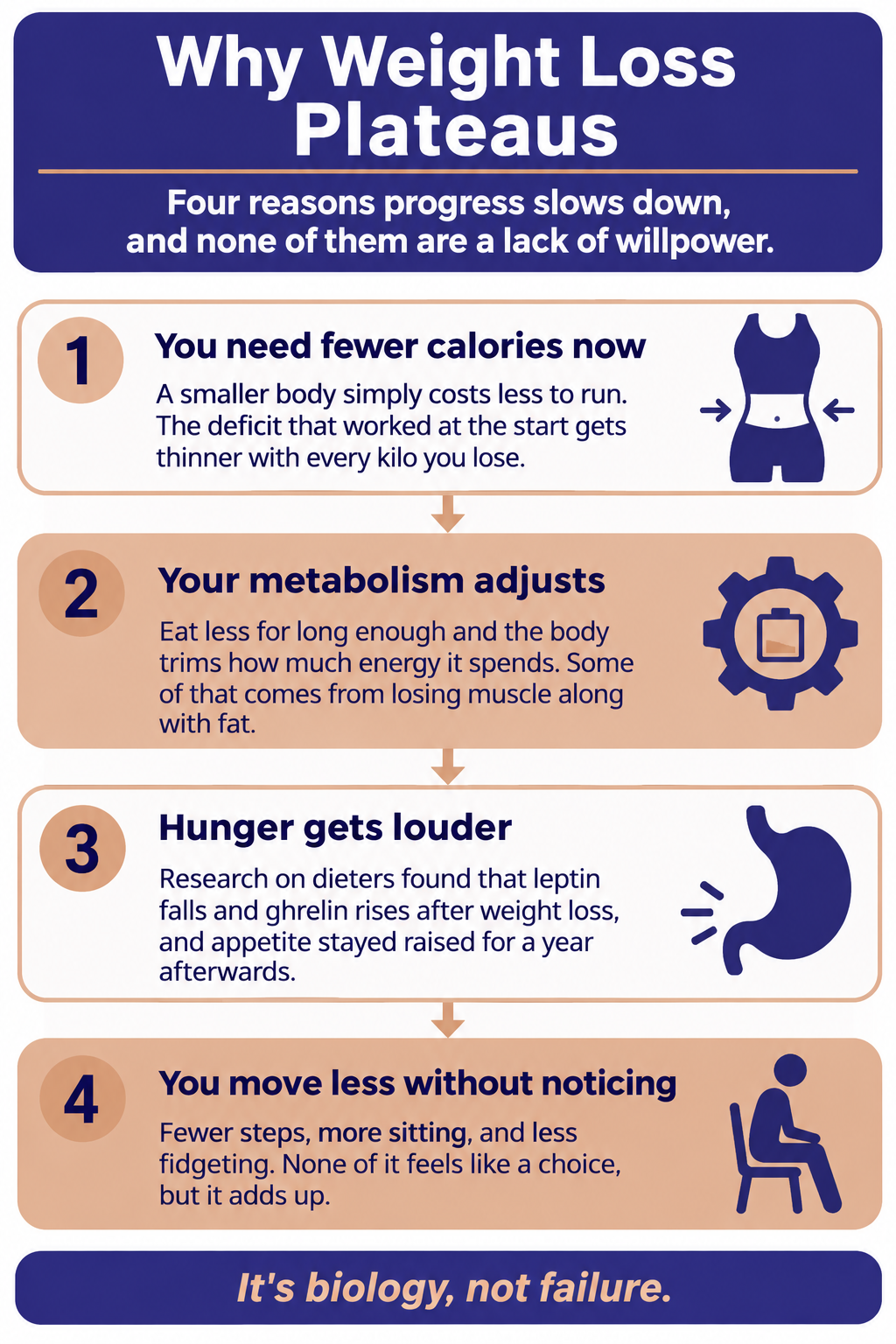
Many people hit this wall because their calorie needs have changed, which is why a medical weight loss programme resets the plan at your new weight instead of repeating the old one.
How Do You Break Through a Weight Loss Plateau?
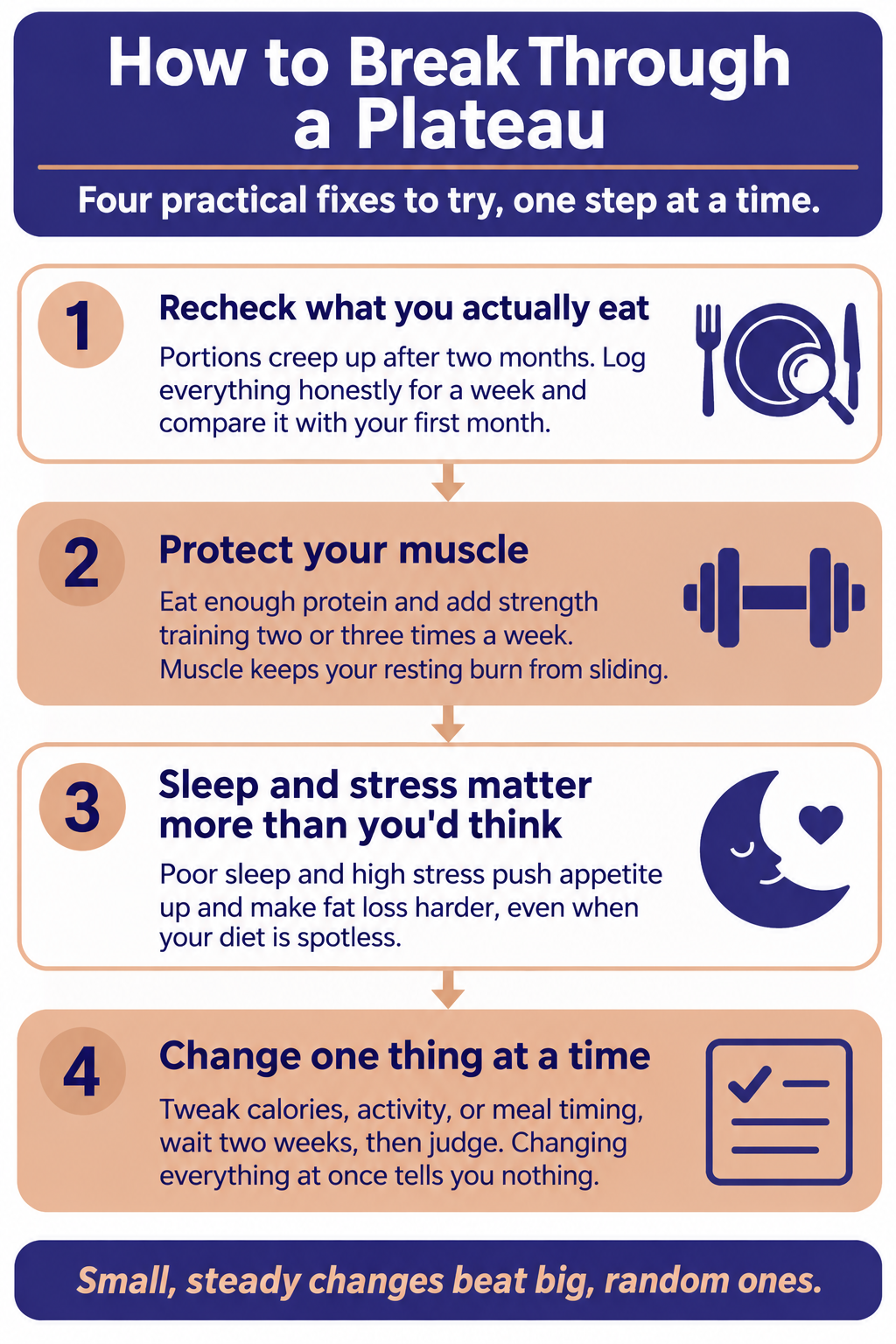
If you’re not sure where to start, a diet consultation can show you which of these is holding you back.
What Determines the Right Approach to Fix a Weight Loss Plateau?
- Where you started. Your starting weight and BMI decide how much room there is to move. You can check yours with the BMI calculator.
- How long you’ve been stuck. Two stalled weeks is normal. Six or more, with no change in measurements, deserves a proper look.
- Your medical background. Thyroid issues, PCOS, hormonal changes, or recent pregnancy can all slow progress and need checking first.
- Your daily life. Work hours, sleep, food habits, and past diets all shape what you can realistically stick to.
Frequently Asked Questions
Is a weight loss plateau after 8 weeks normal?
Yes. Your body weighs less, burns fewer calories, and pushes back with more hunger. It’s a common stage, not a sign the plan failed.
Why does weight loss stop after 8 weeks even when I'm eating well?
Your calorie needs have dropped as you’ve lost weight, so the same diet now creates a smaller deficit. Muscle loss, less daily movement, and rising appetite add to it.
How long does a weight loss plateau last?
It varies. Many plateaus ease in a few weeks once intake, protein, sleep, and activity are adjusted. If nothing moves for six weeks or more, see a doctor.
Should I cut calories further to break a plateau?
Usually not. Eating much less can cost you muscle and increase hunger. A doctor can tell you whether you need a smaller change, a different approach, or tests.
References
- Sumithran P, et al. Long-term persistence of hormonal adaptations to weight loss. N Engl J Med. 2011.
- Investigation of the long-term sustainability of changes in appetite after weight loss. Int J Obes. 2018.
Disclaimer
This article is for general information and is not medical advice. Results vary from person to person. Please consult a qualified doctor before changing your diet, exercise routine, or starting any treatment.
