




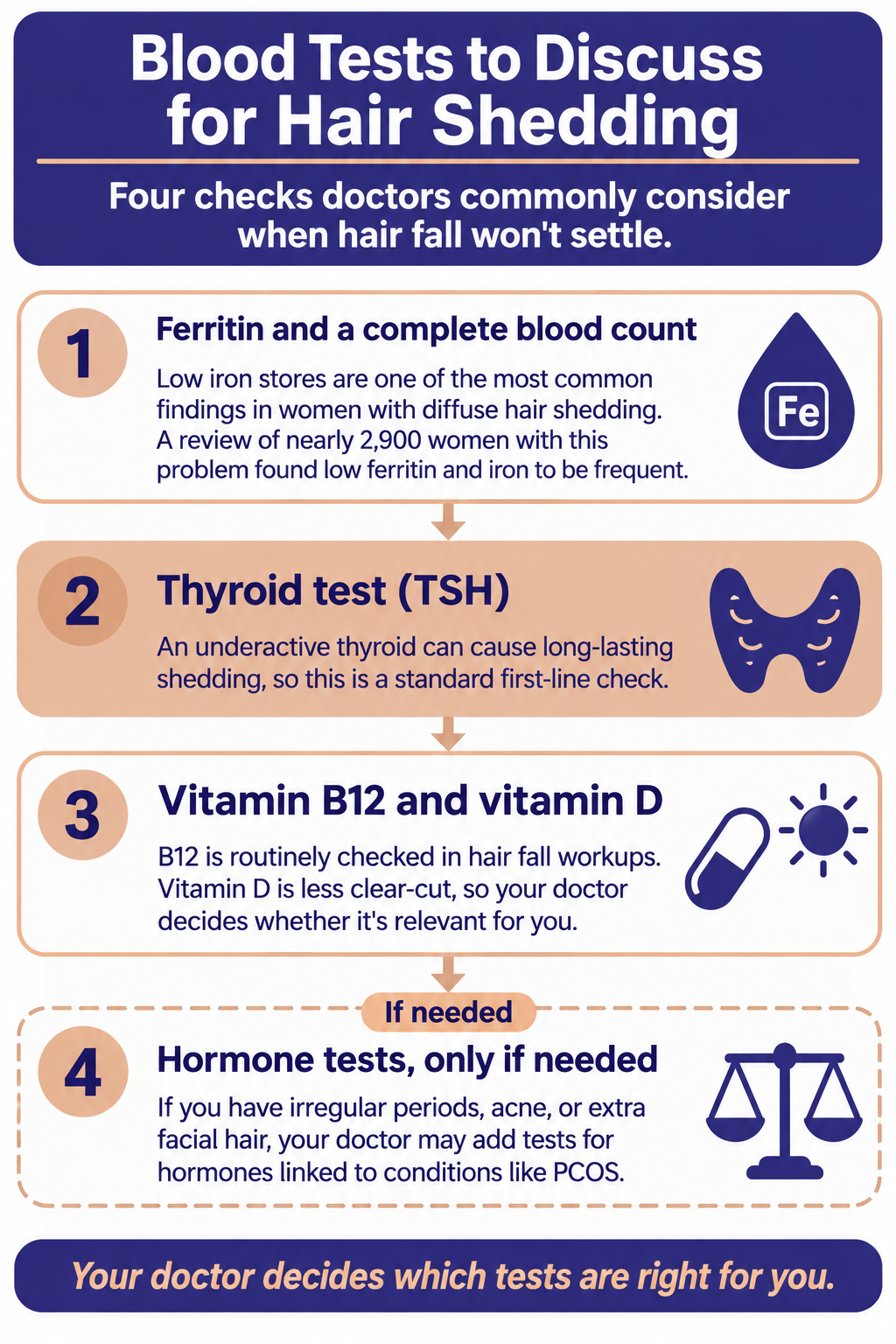
For hair fall in women, a short, targeted panel is usually worth doing: ferritin (your iron stores), a thyroid test, a complete blood count, and vitamin B12. Hormone tests make sense only when your periods, skin, or other symptoms point that way. A giant panel of every test going rarely finds more.
According to Dr. Harjot Kaur, an Aesthetic Physician in Pune, “A lot of women arrive with a stack of reports and still no answer. Tests help most when they’re chosen for you, based on your history and what we see on your scalp. Sometimes a low ferritin or a sluggish thyroid explains it. Sometimes the reports come back normal, and that’s useful information too.”
Worried about hair fall in women and not sure which blood tests to get? Speak to our doctor
Call 072900 54540 | www.theinspiration.in
Which Blood Tests Are Worth Doing for Hair Fall in Women?
Once the numbers are in, a doctor can match them to your scalp and history, and that’s where proper hair fall treatments begin.
What Should You Know Before You Get Tested?
If your reports look fine but the shedding continues, a scalp and hair assessment is the next step, and that’s part of our hair treatment services.
What Determines the Right Approach for Hair Fall in Women?
- The type of hair fall. Sudden shedding all over the scalp and slow thinning at the parting are different problems and need different plans.
- Your recent history. Childbirth, high fever, surgery, rapid weight loss, new medicines, or long stress can all trigger shedding months later.
- What your scalp shows. A doctor looks at hair density, scalp health, and hair strength before deciding if treatment is needed.
- Your test results, read together. One value rarely tells the story. Your doctor reads reports alongside your symptoms and lifestyle.
Frequently Asked Questions
Which blood tests are most useful for hair fall in women?
Ferritin, a thyroid test (TSH), a complete blood count, and vitamin B12 are the usual starting points. Your doctor may add hormone tests based on your symptoms.
Can hair fall happen even if all my blood tests are normal?
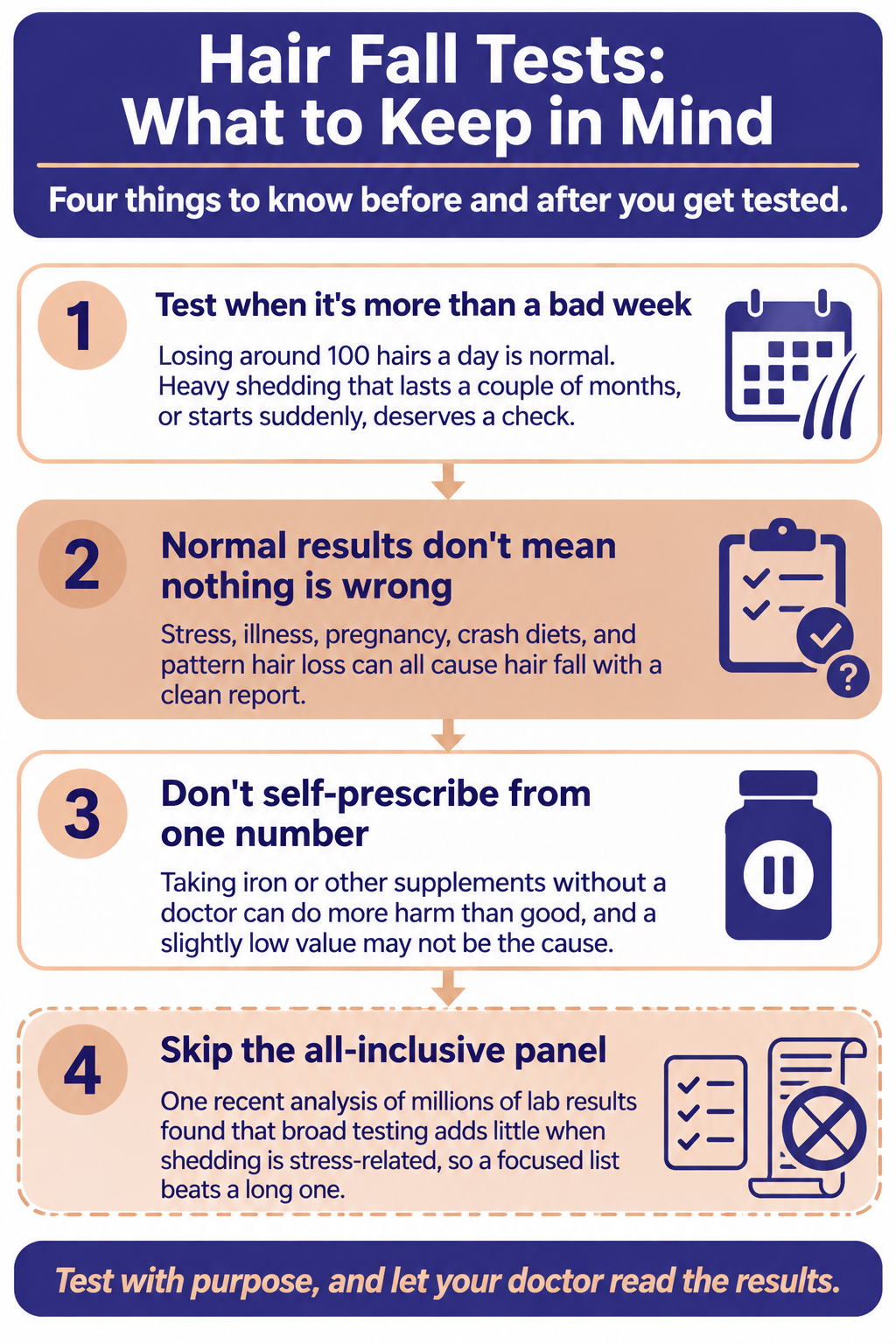
Yes. Stress, recent illness, childbirth, diet changes, and pattern hair loss can cause shedding without any abnormal result.
Do I need to test every vitamin and mineral?
Usually not. A focused panel is generally more useful than a long one, and your doctor can tell you which tests suit your case.
When should I see a doctor for hair fall?
If shedding is heavy, sudden, or has lasted a couple of months, or if you notice thinning at the parting, it’s worth getting checked.
References
- StatPearls. Telogen Effluvium. NCBI Bookshelf, National Library of Medicine.
- Retrospective review of 2851 female patients with telogen effluvium. PubMed Central.
Disclaimer
This article is for general information and is not medical advice. Results vary from person to person. Please consult a qualified doctor before changing your diet, exercise routine, or starting any treatment.
